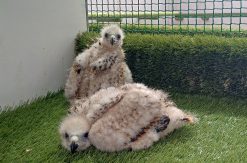
Some of the young red kites that were released in the Aspromonte National Park between July and August 2026 are undertaking explorations of varying distances.
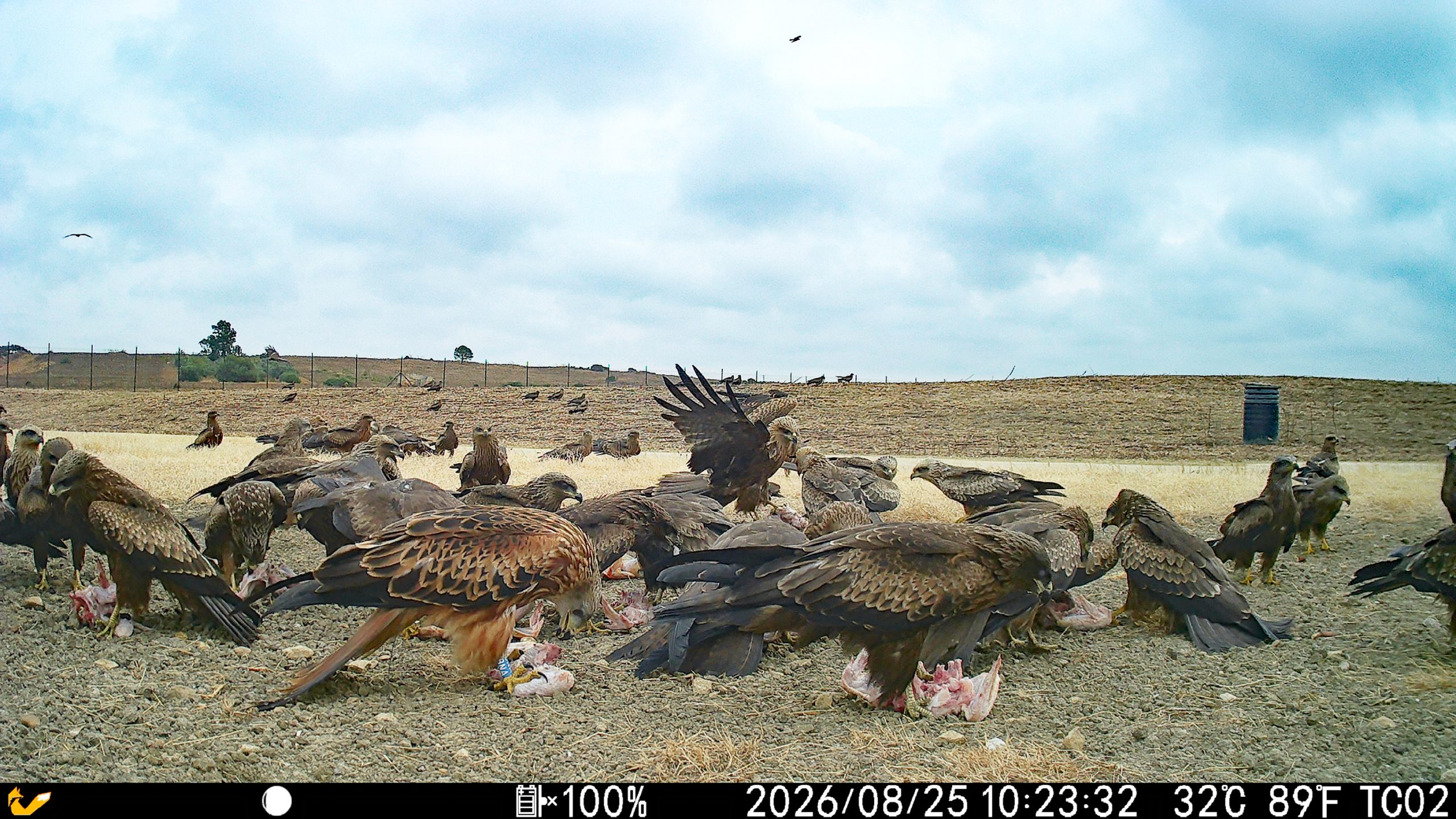
Most of them have not strayed far from the release site, but three individuals, however, have traveled to Sicily and explored various areas there. Two young birds, in particular, reached the western part of the island and were observed and photographed feeding at a carcass site for raptors managed by the CERM Association Center for Threatened Raptors.
The facility is located along the migratory route that thousands of birds nesting in Italy and in Central and Central-Eastern Europe follow in the fall to reach their wintering grounds in sub-Saharan Africa.
Managed by the CERM Association thanks to the support of the Municipality of Campobello di Mazara (TP), this supplemental feeding station serves as a stopover for hundreds of black kites and marsh harriers, as well as numerous red kites and lesser spotted eagles. It is also frequented by migrating Egyptian vultures and by Egyptian vultures that remain in Sicily for the winter.
The red kites Alfonso (identification ring IBNA) and Blanca (ring IBNB), released in the Aspromonte National Park on August 9, 2026, have repeatedly taken advantage of the feeding station, joining the dozens of other raptors that frequent it.
It is clear that facilities like this can provide important support to raptors during migratory and erratic movements, especially in heavily developed areas where intensive farming and various types of infrastructure leave little room for habitats capable of providing natural food sources.
The CERM carcass site in western Sicily, in particular, serves as a resting spot for thousands of birds that, in this part of the island, must wait for favorable weather conditions before embarking on the very long journey that will take them across the Sahara to their wintering grounds.
Alfonso and Bianca, on the other hand, will only use the facility temporarily but will not migrate to Africa; sooner or later, they will return to peninsular Italy and the vicinity of their release site.